

A qualification in business shows your skills and knowledge to succeed in the corporate world. It includes academic business degrees, professional business certifications, and business licensure requirements.
A qualification in business helps you grow in your career and opens many opportunities. You can choose from different types of business qualifications to match your goals.
Many students and professionals pursue a qualification in business to improve business management skills, leadership and management training, and strategic decision-making skills. It also enhances corporate skills development and practical business experience requirements.
A qualification in business can lead to better pay, business career advancement, and recognition in global business networks. With the right business qualification roadmap, you can gain business qualification benefits and improve your entrepreneurial business skills.Here’s the article:
What is Business Qualification?

A business qualification proves you’re ready for the corporate world. It shows employers you have the right skills and knowledge to handle real business challenges. Whether it’s a Higher National Diploma or a BBA degree, these credentials open career doors.
They’re not just certificates, they’re your professional passport. Business qualifications cover essential areas like management, finance, and marketing. They prepare you for leadership roles and help you stand out in today’s competitive job market.
Types of Business Qualifications Available
You have several pathways to build your business career. Academic options like the BBA degree offer university-based learning with strong theory. Practical routes like Pearson HND focus on hands-on skills you can use immediately.
Professional certifications add specialized expertise to your profile. Institutions like Beaconhouse International College provide UK-approved HND programmes with global recognition. Each type serves different goals, choose based on your career plans and learning style.
HND vs BBA: Understanding the Difference
The HND vs BBA comparison comes down to approach and timeline. HND focuses on practical learning with real-world projects and faster completion. It prepares you for immediate employment with industry-focused training. BBA offers comprehensive academic depth across four years.
HND career opportunities include management and operations roles. BBA job scope extends to strategic corporate positions. Both are respected, HND suits quick career starters, BBA fits long-term academic goals.
Career Opportunities and Progression
Both qualifications lead to solid career paths. HND progression to university lets you enter bachelor’s programmes at advanced levels internationally. The BBA to MBA route remains popular for management education. Employers value different strengths, HND graduates bring ready-to-use practical skills.
BBA graduates offer strategic thinking abilities. Professional business training continues throughout your career with leadership and management training. The job market respects both credentials, depending on industry needs and role requirements.
Global Recognition and Quality Standards

International credibility matters for future opportunities. UK-approved HND programmes carry global recognition through Pearson partnership. Accredited business schools ensure your credentials meet worldwide standards. This matters if you’re planning overseas study or work. Business education accreditation guarantees quality learning experiences.
Both HND and BBA from recognized institutions are accepted internationally. Foreign qualification evaluation services help verify credentials for global employment or further education opportunities.
Key Components of Business Qualification
A qualification in business consists of multiple phases that build your knowledge, skills, and credibility. Each phase focuses on a specific area of learning and professional development.
Phase 1: Academic Foundation
- Complete academic business degrees like BBA, MBA, or MSc in Business.
- Learn core business concepts, management principles, and corporate strategies.
- Gain both theoretical knowledge and practical exposure.
Phase 2: Professional Certifications
- Obtain industry-specific business credentials like PMP, ACCA, CPA, or marketing and finance certifications.
- Develop specialized skills in project management, finance, or leadership.
- Certifications enhance career growth and employability.
Phase 3: Licenses and Compliance
- Fulfill business licensure requirements in regulated industries.
- Learn to navigate legal frameworks and compliance standards.
- Ensures you are authorized for professional practice.
Phase 4: Practical Experience
- Participate in business-oriented internships or real-world projects.
- Apply knowledge to solve business problems and improve decision-making skills.
- Strengthens corporate skills development and strategic thinking.
Phase 5: Global and Continuous Learning
- Pursue foreign qualifications like an international MBA for global recognition.
- Engage in short courses online for upskilling and reskilling.
- Continuously update skills to stay competitive in business career pathways.
A qualification in business ensures that you are prepared to make strategic decisions, lead teams, and achieve career advancement. It also improves your business competency development and overall professional profile.
Who Can Opt for a Business Qualification?
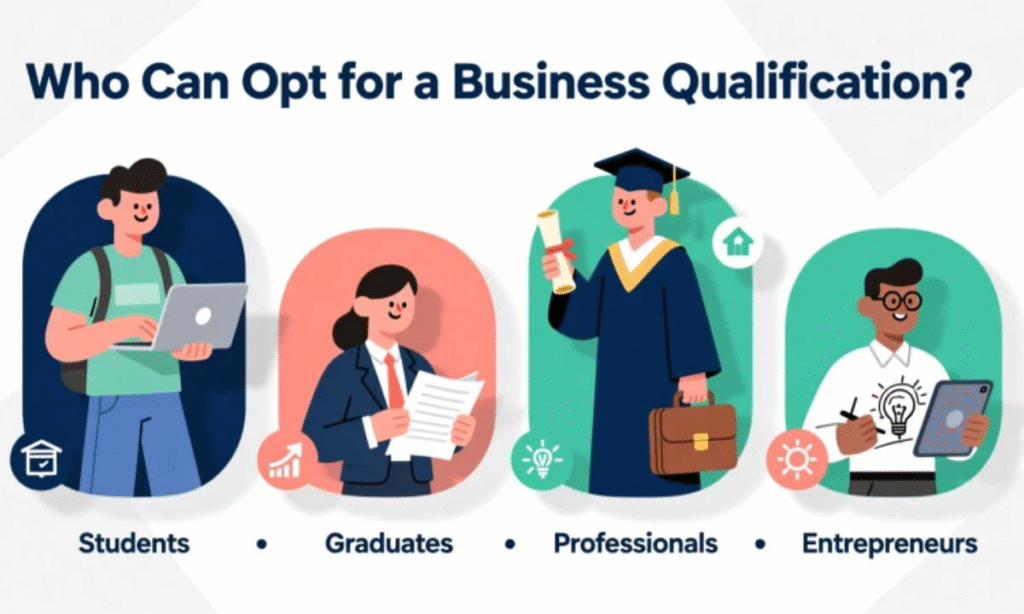
Business qualifications are not limited to a particular background. Students, graduates, professionals, and entrepreneurs can all pursue them.
Students and Graduates
- High school graduates can enroll in a business administration degree like BBA or BS in Business Management.
- Bachelor’s holders can pursue an MBA, MSc, or professional certifications to improve career prospects.
Professionals and Entrepreneurs
- Working professionals can enhance their corporate job qualification through certifications like PMP or ACCA.
- Entrepreneurs can learn entrepreneurial business skills and practical strategies to grow startups.
By following a structured business qualification roadmap, you can identify the best courses and programs to meet your career goals.
Types of Business Qualifications
There are several types of business qualifications available. Choosing the right type depends on your career goals and current education.
Academic Degrees
- Bachelor’s Degrees: BBA, BS in Business Administration, or Finance degrees.
- Master’s Degrees: MBA or MSc in Business Management.
- Provide theoretical understanding and practical experience.
Professional Certifications
- PMP, Six Sigma, Google Analytics, ACCA, and CPA.
- Enhance specialized skills and quick career growth.
Licenses and Short Courses
- Required for compliance in regulated industries.
- Offer focused skills training through online programs or short-term workshops.
Foreign Qualifications
- International MBA qualifications and cross-border business qualifications provide global recognition.
- Helps in business degree recognition and business qualification acceptance abroad.
Business Qualification Criteria and Requirements
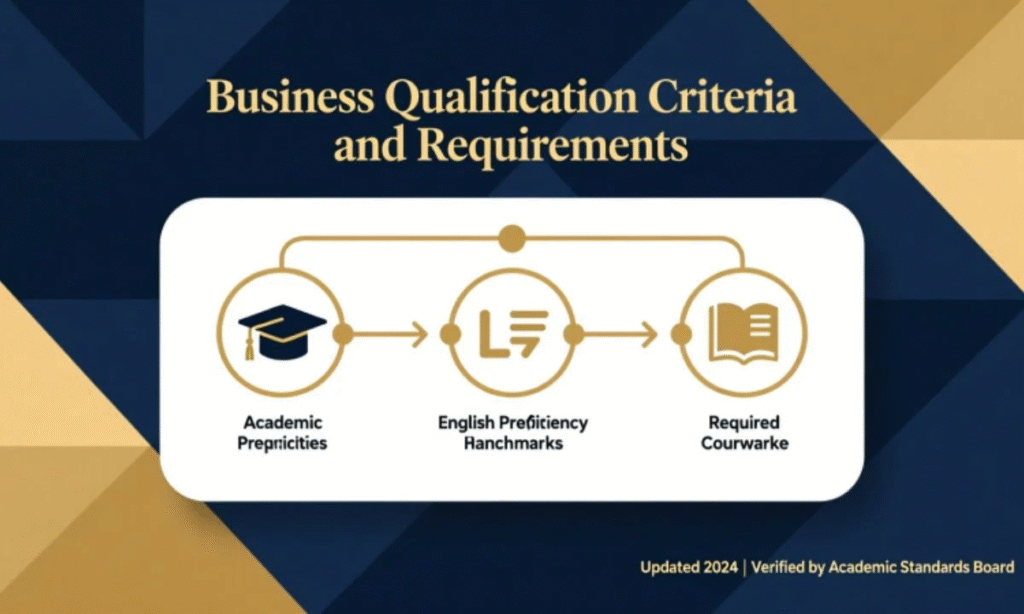
Every business qualification has specific entry requirements and assessment criteria that you need to meet. Understanding these requirements, from academic prerequisites to English proficiency and coursework expectations, helps you choose the right path for your career goals. Whether you’re exploring an HND in Business Pakistan or considering a BBA degree, knowing the qualification criteria ensures you select a programme that matches your strengths and opens doors to management, entrepreneurship, or corporate leadership roles.
Education
- Minimum high school diploma or bachelor’s degree.
- Some programs may require prior knowledge in finance, marketing, or management.
Experience
- Internships and practical business experience requirements are essential for hands-on learning.
- Helps apply theoretical knowledge to real-world business challenges.
Certifications
- Professional certifications such as ACCA, CPA, or PMP may be mandatory for advanced programs.
- Provides assurance that you have the foundational skills needed for success.
Foreign Qualification for Business

Foreign qualifications in business have become increasingly valuable for professionals seeking global career growth and international recognition. These credentials demonstrate your ability to meet worldwide educational standards and adapt to diverse business environments.
Whether you’re pursuing opportunities in multinational corporations or planning to work abroad, a foreign business qualification serves as a powerful career accelerator that sets you apart in today’s competitive marketplace.
Global Recognition
A foreign qualification showcases your expertise on an international stage and proves your skills meet global standards. Employers worldwide recognize these credentials, making you stand out in competitive job markets and opening doors to multinational companies.
- Shows your professional skills are valued internationally
- Increases credibility with global employers and business networks
- Demonstrates knowledge of international business practices and standards
Career Advancement Opportunities
Foreign business qualifications dramatically boost your employment prospects in leading corporations and create pathways to senior management roles. These credentials position you for cross-border business opportunities and help you build a truly global career.
- Improves chances of landing roles in multinational companies
- Opens opportunities for international projects and assignments
- Enhances prospects for specialized positions requiring global expertise
Credential Evaluation and Equivalency
WES credential evaluation and official assessment services confirm your foreign degree meets local educational and professional standards. This evaluation ensures your business degree equivalency is recognized by authorities, removing barriers to career progression.
- Verifies your qualification meets regulatory and professional requirements
- Ensures acceptance by employers and licensing bodies
- Strengthens professional credibility across different countries
What Is a Qualification in Business Management
A qualification in business management proves your ability to manage teams, resources, and strategies effectively.
Skills Developed
- Leadership and Management Training: Prepare to lead teams and make key decisions.
- Strategic Decision-Making Skills: Helps in planning and operational execution.
- Organizational Strategy and Operational Planning: Improves overall business performance.
Programs and Degrees
- Bachelor’s in Management, MS in Business Management Sciences, or MBA.
- CMI and ILM certifications provide specialized management expertise.
These qualifications enhance corporate skills development, business professional development, and career growth potential.
Professional Qualification vs Certification
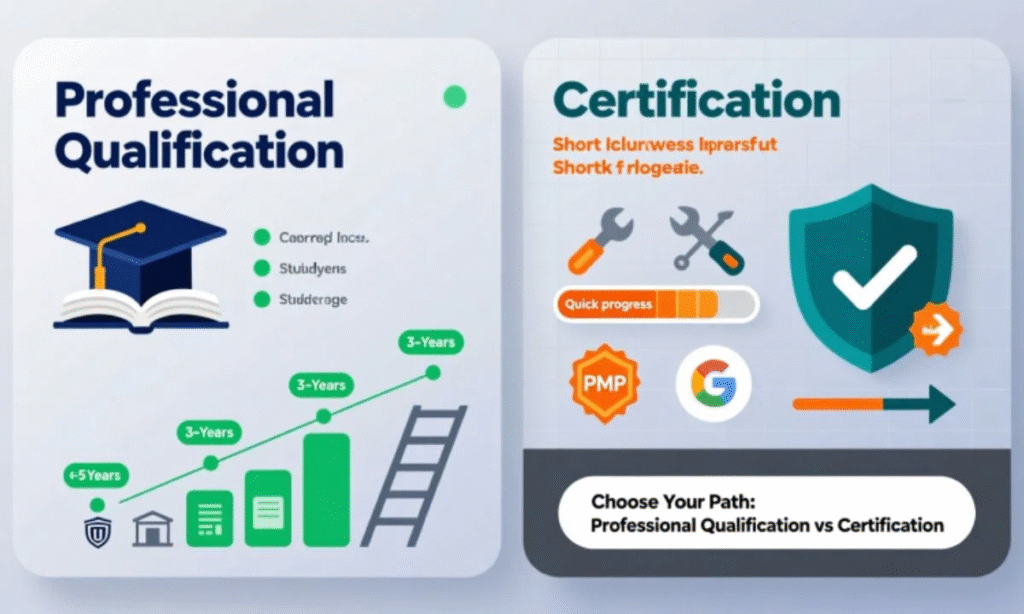
Understanding the difference helps you choose the right path for career advancement.
Professional Qualification
- Provides in-depth knowledge and long-term career growth.
- Requires formal education, work experience, and passing exams.
- Examples: ACCA, CFA, CIMA.
Certification
- Focuses on specific skills or tools.
- Shorter duration with faster career impact.
- Examples: PMP, Google Analytics, Six Sigma.
Both enhance business career pathways but in different ways.
Benefits of Business Qualification
A business qualification is more than just a certificate, it’s your gateway to professional success and personal growth. Whether you’re eyeing leadership roles, starting your own venture, or climbing the corporate ladder, the right business education equips you with tools that transform ambition into achievement. From mastering strategic decision-making to unlocking higher earning potential, these qualifications create pathways that align with both local market demands and global business recognition standards.
Career Growth
Unlock Leadership and Corporate Opportunities, Business qualifications open direct pathways to managerial and executive positions across industries. With credentials like HND Business Management or BBA degrees recognized by employers in Pakistan and internationally, you gain competitive advantage in job markets.
- Access to Leadership Positions: Qualifications position you for supervisory, managerial, and executive roles that require formal business education credentials and strategic oversight capabilities.
- Enhanced Employability: Employers prioritize candidates with recognized business qualifications, making you a preferred choice for corporate sector positions demanding professional business training.
- Entrepreneurial Readiness: Business programmes develop entrepreneurial business skills essential for launching and managing successful startups, from business planning to financial management.
- Professional Networking: Connect with industry professionals, alumni networks, and business communities that facilitate career-oriented opportunities and business career advancement throughout your professional journey.
- Industry Recognition: Credentials from accredited institutions carry weight across sectors, meeting corporate sector education requirements and demonstrating commitment to professional development.
- Career Flexibility: Business qualifications open diverse pathways across marketing, finance, operations, HR, and consulting, allowing you to pivot between industries based on interests.
- Global Mobility: International business degree recognition enables cross-border career opportunities, particularly with UK-approved qualifications like Pearson HND that meet global business recognition standards.
- Competitive Differentiation: Stand out in crowded job markets where business management qualifications Pakistan employers increasingly demand as minimum requirements for advancement opportunities.
Skill Development
Master Essential Management and Leadership Competencies
Quality business programmes focus on developing critical competencies including strategic decision-making skills, project management capabilities, and organizational leadership. Through practical business experience requirements, students build business management skills that translate directly to workplace challenges.
- Strategic Thinking: Develop analytical frameworks for evaluating business challenges, identifying opportunities, and making data-driven decisions that align with organizational goals and market dynamics.
- Leadership Capabilities: Build skills to motivate teams, manage conflicts, delegate effectively, and inspire performance through courses focused on leadership and management training principles.
- Project Management: Learn methodologies for planning, executing, and delivering projects on time and within budget, preparing for project management certifications that enhance professional credentials.
- Communication Excellence: Master written, verbal, and presentation skills essential for stakeholder engagement, negotiations, and conveying complex business concepts across organizational levels.
- Financial Acumen: Understand financial statements, budgeting, forecasting, and investment analysis, critical for roles requiring business administration degree competencies and fiscal responsibility.
- Problem-Solving Expertise: Apply critical thinking and creative approaches to resolve operational challenges, using case studies and real-world scenarios embedded in student-centred business programmes Pakistan curricula.
- Digital Competency: Gain proficiency in business software, data analytics tools, and emerging technologies that support business competency development in modern digital-first environments.
- Collaborative Teamwork: Experience group projects and collaborative learning that mirror workplace dynamics, building interpersonal skills and cross-functional coordination abilities essential for organizational management training.
Financial Benefits
Accelerate Earning Potential and Professional Value
Research consistently shows salary growth with business degrees outpaces non-qualified peers, with graduates commanding premium compensation. Credentials from accredited business schools and programs carry significant weight during salary negotiations and career progression.
- Higher Starting Salaries: Business degree holders typically earn 20-40% more than peers without qualifications, with BBA and HND graduates accessing better-compensated entry-level positions.
- Faster Promotions: Formal qualifications accelerate advancement timelines, with employers prioritizing credentialed professionals for supervisory roles that come with substantial salary increments and benefits.
- Premium Industry Access: Business qualifications open doors to high-paying sectors like banking, consulting, technology, and multinational corporations that require formal business education accreditation standards.
- Negotiation Leverage: Recognized credentials strengthen your position during salary discussions, demonstrating verifiable expertise that justifies premium compensation compared to non-qualified candidates.
- Long-Term Earnings Growth: Career trajectory analysis shows business qualification benefits compound over decades, with qualified professionals reaching senior positions offering executive-level compensation packages.
- International Opportunities: Global business recognition of credentials like UK-approved HND Pakistan qualifications enables access to international markets with higher salary benchmarks and expatriate benefit packages.
- Entrepreneurial Returns: Business education equips you with skills to build profitable ventures, with trained entrepreneurs showing higher success rates and revenue generation than those without formal training.
- Professional Certification Pathways: Business degrees create foundations for advanced certifications like ACCA and CPA qualifications, MBA progression, and specialized credentials that further boost earning potential and career value.
Top Business Development Skills That Drive Career Growth
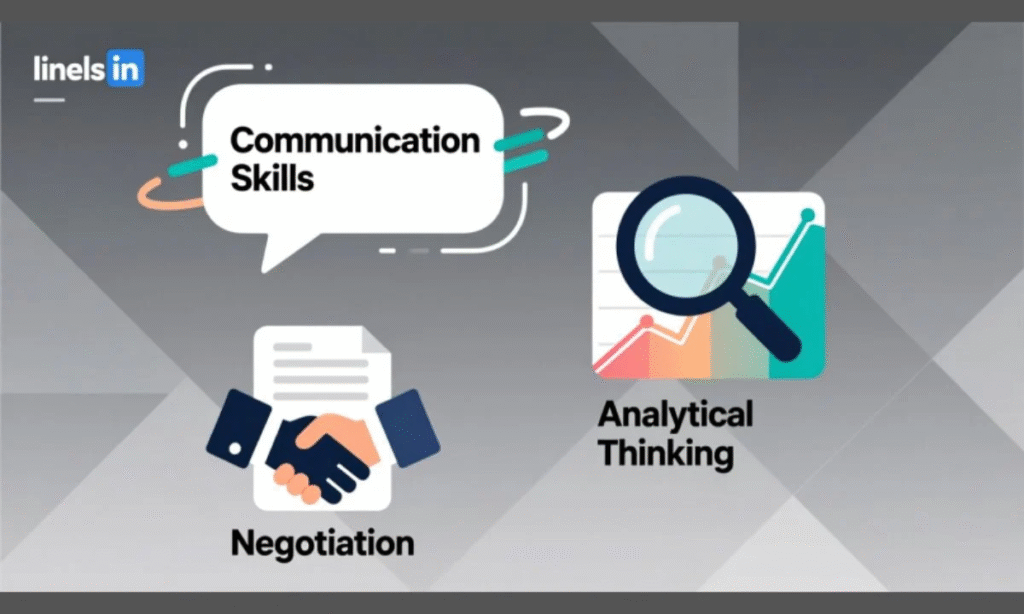
Business development requires specific skills to succeed.
Skills
- Communication Skills: Persuasive and clear for networking and client engagement.
- Analytical Thinking: Helps in evaluating opportunities and making decisions.
- Negotiation: Essential for closing deals and improving business performance.
Impact on Career
- Improves business professional development.
- Boosts workforce upskilling statistics.
- Supports overall career progression and recognition.
What is a Business Development Representative?
Business development demands a strategic blend of communication excellence, relationship building, and market insight. Successful professionals master negotiation tactics, lead generation techniques, and client retention strategies while demonstrating strong analytical thinking. These core competencies, combined with sales acumen, networking abilities, and problem-solving expertise, create the foundation for securing deals, expanding market presence, and driving sustainable revenue growth across competitive industries.
Roles and Responsibilities
- Research leads and manage outreach campaigns.
- Support sales teams and maintain client relationships.
- Drive growth in corporate sales pipelines.
Skills Developed
- Uses business skills certification programs to improve efficiency.
- Builds business career pathways and improves corporate job qualifications.
How to Start a Successful Freelance Writer Side Hustle

Freelance writing is a flexible way to earn extra income.
Getting Started
- Identify your niche and build a strong portfolio.
- Use business writing skills to create high-quality content for clients.
Skills to Learn
- Marketing and finance certifications improve credibility.
- Learn to pitch clients and manage deadlines efficiently.
Keys to Succes
- Stay consistent and committed.
- Apply principles from your business qualification roadmap.
- Develop entrepreneurial business skills to scale your freelance work.
Frequently Asked Question
What is qualifying in business?
A business qualification is any formal credential, degree, diploma, or certification, that proves a person’s skills and knowledge in business-related fields.
What is the best qualification for business management?
The best qualification for business management is typically an MBA or a specialized business management degree depending on career goals.
Which certification is best for business?
The best business certification varies by field, but popular options include PMP, Google Project Management, and Chartered Management certifications.
What are Level 7 qualifications?
Level 7 qualifications are advanced postgraduate-level programs equivalent to a master’s degree.
Is Level 7 a diploma?
Yes, a Level 7 qualification can be a diploma, certificate, or postgraduate award depending on the programme.
What is a Level 7 Diploma in Business Strategy?
A Level 7 Diploma in Business Strategy is an advanced qualification focused on strategic planning, leadership, and high-level business decision-making.
Final Thoughts
A qualification in business is more than a degree or certificate. It validates your skills, improves your career pathways, and enhances your earning potential. Whether you pursue an academic degree, professional certification, or foreign qualification, each path strengthens your corporate skills development, leadership, and business management skills.
By following the right business qualification roadmap, anyone can achieve career growth, global recognition, and practical business experience. Investing in a qualification in business is a step toward long-term success in corporate, entrepreneurial, and professional development.

I’m Juniper Rose, and I’ve been writing for 5 years. I’m just starting this blog, and I promise you’ll enjoy the journey!
